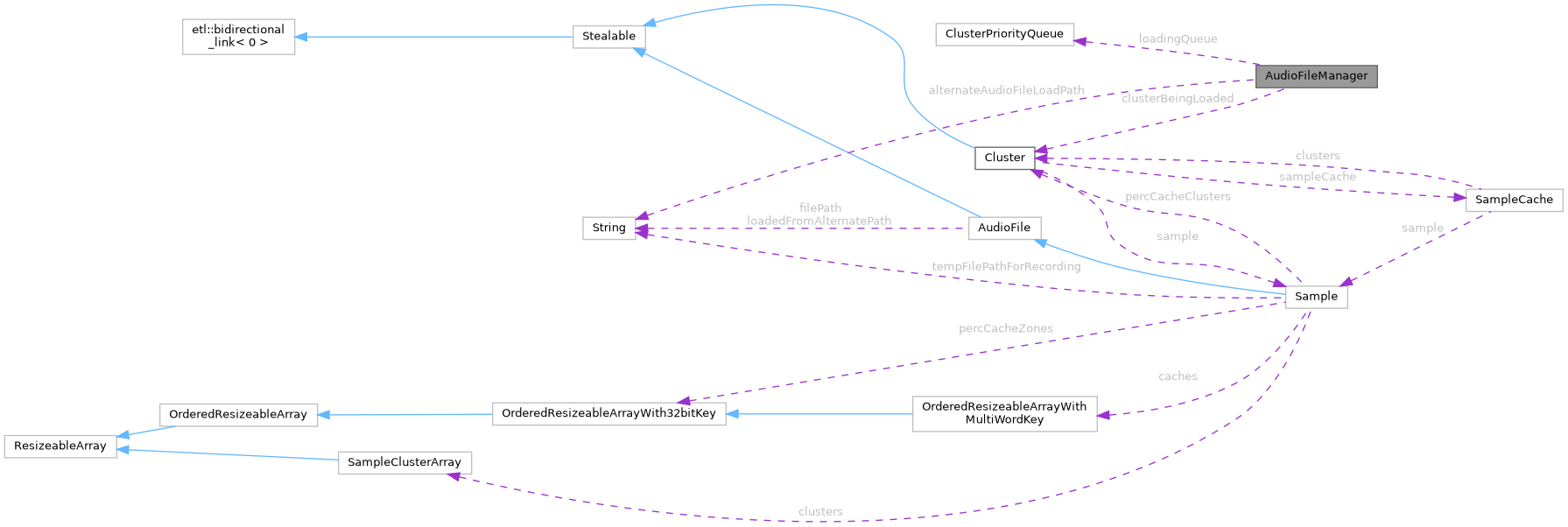
|
|
void | init () |
|
AudioFile * | getAudioFileFromFilename (String &fileName, bool mayReadCard, Error *error, FilePointer *filePointer, AudioFileType type, bool makeWaveTableWorkAtAllCosts=false) |
|
bool | loadCluster (Cluster &cluster, int32_t minNumReasonsAfter=0) |
|
void | loadAnyEnqueuedClusters (bool mayProcessUserActionsBetween=false) |
| | Finishes off Clusters the SD interrupt has read, and gets it reading any that are enqueued.
|
| bool | loadEnqueuedClusterNow (Cluster &cluster) |
| | Loads cluster right now if it's in the loading queue, without loading what's ahead of it. If the SD interrupt's already reading it, waits for that instead.
|
|
void | removeReasonFromCluster (Cluster &cluster, char const *errorCode, bool deletingSong=false) |
| bool | prefetchCluster (Sample *sample, int32_t clusterIndex) |
| | Holds a Cluster that's likely to be requested soon, loading it first if need be.
|
|
uint32_t | getPrefetchGeneration () const |
| | Changes whenever a Cluster is added to or released from the prefetch list. While it and what a caller would ask for are unchanged, asking again won't do anything.
|
| void | claimPrefetch (Cluster const *cluster) |
| | Lets go of a prefetched Cluster, now that something that's going to play it holds its own reason on it.
|
|
void | releasePrefetchesForSample (Sample const *sample) |
| | Lets go of every prefetched Cluster of sample, e.g. because what was going to play it has stopped.
|
|
void | releaseUnloadablePrefetches () |
| | Lets go of prefetched Clusters that will never load because they're unloadable.
|
|
void | releaseAllPrefetches () |
| | Lets go of every prefetched Cluster and its Sample, loaded or not.
|
|
bool | ensureEnoughMemoryForOneMoreAudioFile () |
|
void | slowRoutine () |
|
Error | setupAlternateAudioFilePath (String &newPath, int32_t dirPathLength, String &oldPath) |
|
Error | setupAlternateAudioFileDir (String &newPath, char const *rootDir, const char *songFilenameWithoutExtension) |
|
bool | loadingQueueHasAnySampleStarts () |
| | Whether any Samples' first Clusters, which let them start instantly, are still waiting to load.
|
|
bool | hasClusterLoadsPending () |
| | Whether any Clusters are still waiting to load, or being loaded.
|
|
void | forgetClusterRead (Cluster const *cluster) |
| | Makes sure the SD interrupt is done with cluster, and won't hand it back to finish loading, so it can be deleted. Waits if it's being read right now. ~Cluster() calls this.
|
| Error | getUnusedAudioRecordingFilePath (String &filePath, String *tempFilePathForRecording, AudioRecordingFolder folder, uint32_t *getNumber, const char *channelName, String *songName) |
|
void | deleteAnyTempRecordedSamplesFromMemory () |
|
void | deleteUnusedAudioFileFromMemory (AudioFile &audioFile, int32_t i) |
|
void | deleteUnusedAudioFileFromMemoryIndexUnknown (AudioFile &audioFile) |
|
bool | tryToDeleteAudioFileFromMemoryIfItExists (char const *filePath) |
|
void | thingBeginningLoading (ThingType newThingType) |
|
void | thingFinishedLoading () |
|
void | setCardRead () |
|
void | setCardEjected () |
|
bool | canLoadClusters () const |
|
void | firstCardRead () |
|
|
size_t | numClusterReads () const |
|
bool | isClusterBeingRead (Cluster const *cluster, const InterruptsDisabled &) const |
|
bool | nextClusterRead (SdAsyncRead &read, const InterruptsDisabled &) |
| | For the SD interrupt (see sd_async.h) - takes the next Cluster off the loading queue, to read.
|
|
void | clusterReadDone (int error, const InterruptsDisabled &) |
| | For the SD interrupt - it's finished reading clusterBeingRead_.
|
|
void | finishClusterReads () |
| | Finishes off Clusters the SD interrupt has read.
|
|
void | finishClusterRead (Cluster &cluster, int32_t error) |
|
void | finishLoadingCluster (Cluster &cluster) |
| | Converts cluster's data and swaps the bytes that overhang its neighbours, now that it's been read.
|
|
void | recycleUnwantedCluster (Cluster &cluster) |
| | Recycles a Cluster whose last reason was removed while the SD interrupt was reading it.
|
|
void | releasePrefetch (size_t i) |
| | Removes the reasons prefetches_[i] holds, and removes it from prefetches_, keeping the order.
|
|
void | releasePrefetchesIf (auto shouldRelease) |
| | Releases every prefetch shouldRelease returns true for.
|
|
void | cardReinserted () |
|
int32_t | readBytes (char *buffer, int32_t num, int32_t *byteIndexWithinCluster, Cluster **currentCluster, uint32_t *currentClusterIndex, uint32_t fileSize, Sample *sample) |
|
int32_t | loadAiff (Sample *newSample, uint32_t fileSize, Cluster **currentCluster, uint32_t *currentClusterIndex) |
|
int32_t | loadWav (Sample *newSample, uint32_t fileSize, Cluster **currentCluster, uint32_t *currentClusterIndex) |